Water Damage Restoration in North Arlington, Arlington, TX

Expert water damage solutions available now—contact us for your complimentary inspection and restoration quote.

Get Your Estimate Call Us Now
(817) 330-6046

Emergency Response Team

Water damage doesn't wait, and neither do we! Our certified technicians deploy rapidly to minimize damage and begin restoration immediately!

24-Hour Availability

Disasters strike at any hour. Our response line stays active day and night to dispatch help when you need it most!

Fast Water Extraction

Time is critical with water damage. Reach us early in the day and we'll have equipment on-site the same day!

Get Your Free Estimate Today

Contact us today for professional service and free estimates

Call Now

Professional Water Damage Restoration for North Arlington Properties

Many North Arlington property owners believe that water damage is always obvious and dramatic—burst pipes spraying water everywhere or floodwaters rushing through doors. The reality is far more insidious. Most devastating water damage happens silently, hidden behind walls, under flooring, and within ceiling cavities where moisture accumulates undetected for weeks or months before structural problems become apparent.

Understanding the true nature of water damage is essential for protecting your North Arlington property. Whether you’re near the entertainment district along Division Street, in established neighborhoods around Vandergriff Park, or in residential areas closer to Collins Street, your property faces unique water damage risks that require professional expertise to address properly.

Myth-Busting Common Water Damage Misconceptions

Let’s address the most dangerous misconception first: drying visible water is not the same as water damage restoration. When water infiltrates your property, it doesn’t simply sit on surfaces waiting to be mopped up. Water migrates through porous materials like drywall, insulation, subflooring, and framing lumber. It wicks upward through capillary action in walls and spreads horizontally through floor systems.

Many property owners make costly mistakes by renting a consumer-grade wet vacuum or setting up box fans, assuming this addresses the problem. These surface-level efforts leave moisture trapped in building materials where it fuels mold growth, wood rot, and structural deterioration. Within 24-48 hours, mold colonies begin establishing themselves. Within weeks, wooden structural components start losing integrity.

Another widespread myth suggests that small leaks don’t require professional attention. A slow drip from a supply line or minor toilet overflow might seem manageable with towels and household fans. However, the volume of water matters far less than the duration of exposure. A pinhole leak releasing just a few gallons per day can saturate wall cavities and subfloors over time, creating extensive damage that costs thousands more to repair than the original professional restoration would have cost.

The Science Behind Effective Water Damage Restoration

Professional water damage restoration relies on principles of psychrometrics—the science of air and moisture interaction. Effective drying requires creating specific environmental conditions where evaporation occurs rapidly and moisture-laden air is continuously removed from the affected space.

This process demands industrial-grade equipment that homeowners simply cannot access. High-volume extractors remove standing water far more thoroughly than shop vacuums. Commercial dehumidifiers process hundreds of pints of moisture daily, compared to the 30-50 pint capacity of residential units. Air movers create targeted airflow patterns that accelerate evaporation from building materials without simply pushing moisture to new locations.

Equally important is moisture detection technology. Infrared cameras reveal hidden water accumulation behind surfaces. Penetrating moisture meters measure water content deep within materials, not just at the surface. Thermo-hygrometers track temperature and humidity levels to verify drying progress. Without this diagnostic equipment, you’re essentially guessing about the extent of damage and effectiveness of drying efforts.

Category and Class: Why Water Damage Isn’t One-Size-Fits-All

The restoration industry classifies water damage by both category (contamination level) and class (evaporation rate), yet most property owners have never heard these terms. This knowledge gap leads to inappropriate response strategies.

Category 1 water originates from sanitary sources like supply lines and appears “clean.” Many assume this water poses no health risks and can be addressed casually. However, Category 1 water quickly degrades to Category 2 (gray water with bacterial contamination) within hours as it contacts building materials and surfaces. If not addressed within 48 hours, it becomes Category 3 (black water with severe contamination requiring extensive remediation protocols).

Class ratings (1-4) indicate how quickly materials release moisture. Class 1 affects materials with low absorption rates and requires minimal drying time. Class 4 involves specialty materials like hardwood, plaster, and concrete that require extended drying with specific techniques. Treating Class 4 damage with Class 1 methods guarantees restoration failure.

North Arlington’s Specific Water Damage Vulnerabilities

North Arlington properties face particular challenges that generic restoration advice doesn’t address. Our area’s clay-heavy soils expand and contract with moisture changes, creating foundation movement that stresses plumbing connections and creates entry points for groundwater infiltration. Summer storms deliver intense rainfall that overwhelms drainage systems, particularly in lower-lying areas near Johnson Creek and Village Creek tributaries.

Older properties throughout North Arlington often have galvanized steel plumbing that corrodes from the inside, creating pinhole leaks within walls that go undetected until significant damage occurs. Even newer construction faces risks from HVAC condensate line failures, water heater malfunctions, and appliance supply line failures—problems that occur regardless of property age.

The Hidden Costs of DIY Water Damage Response

Beyond the obvious risk of incomplete drying and subsequent mold growth, DIY approaches carry financial consequences that aren’t immediately apparent. Insurance companies increasingly deny claims or reduce payouts when policyholders delay professional restoration or attempt inadequate remediation themselves. Insurers argue that failure to properly mitigate damage represents negligence that voids coverage.

Additionally, improper drying techniques can cause secondary damage exceeding the original water damage. Excessive heat application warps flooring and millwork. Inadequate air movement creates differential drying that causes materials to cup, crown, or delaminate. Failure to address hidden moisture leads to mold remediation costs that dwarf professional water restoration expenses.

Our Comprehensive North Arlington Water Damage Solutions

Professional water damage restoration follows structured protocols developed by the Institute of Inspection, Cleaning and Restoration Certification (IICRC). Our certified technicians implement these standards across every project:

  • Emergency Water Extraction: Immediate removal of standing water using truck-mounted and portable extraction equipment
  • Comprehensive Moisture Mapping: Thermal imaging and moisture detection to identify all affected areas, including hidden damage
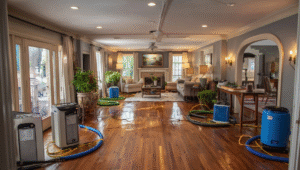
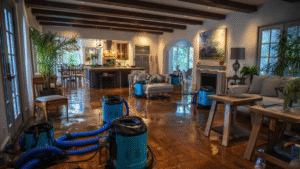
  • Structural Drying: Strategic placement of commercial dehumidifiers and air movers to create optimal drying conditions
  • Continuous Monitoring: Daily moisture readings and environmental measurements to verify drying progress
  • Antimicrobial Treatment: Application of EPA-registered antimicrobials to prevent microbial growth during drying
  • Content Protection: Inventory, pack-out, and storage of salvageable belongings with specialized cleaning when needed
  • Documentation Services: Detailed photo documentation and moisture logs for insurance claim support

Time-Sensitive Action Prevents Catastrophic Losses

The single most important factor in water damage outcomes is response time. Damage escalates exponentially with each passing hour. Materials that could be saved with immediate extraction require replacement after 72 hours of saturation. Mold remediation becomes necessary when professional drying doesn’t begin within the first 48 hours.

Your North Arlington property deserves protection from both immediate water damage and the long-term consequences of improper restoration. Don’t let misconceptions about water damage restoration put your investment at risk. Contact our certified water damage restoration specialists immediately for rapid response, thorough assessment, and professional restoration that returns your property to pre-loss condition.

FAQ

Frequently Asked Questions

Consumer equipment lacks the power to create proper drying conditions in saturated building materials. Box fans simply move air without controlling humidity levels, while residential dehumidifiers process only 30-50 pints daily compared to the 150-200 pints commercial units extract. Without moisture meters and thermal imaging, you cannot verify that hidden moisture in walls and subfloors has dried completely, leading to mold growth and structural damage within weeks.

Drying timelines depend on water category, affected materials, and environmental conditions—not arbitrary timeframes. Light Category 1 damage to non-porous surfaces may dry in 2-3 days, while Category 3 contamination affecting insulation and subflooring requires 5-7 days or longer. Professional monitoring with moisture meters determines completion, not calendar dates. Rushing the process leaves hidden moisture that causes expensive problems later.

Coverage depends on the water source, not damage severity. Sudden and accidental events like burst pipes, appliance malfunctions, and roof leaks from storm damage typically receive coverage. Gradual damage from long-term leaks, lack of maintenance, and flooding from external sources usually face exclusions. Professional restoration companies provide detailed documentation supporting your claim and often handle direct insurance billing to simplify the process.

Mold requires moisture, organic material, and time—typically 24-48 hours of sustained dampness. Professional restoration that begins within hours and achieves thorough drying within 3-5 days prevents mold establishment. However, delayed response or incomplete drying creates ideal conditions for colonization. The myth that "a little mold is normal" ignores health risks and the exponential growth rate once colonies establish themselves in building cavities.

Water trapped in wall cavities cannot dry through painted surfaces and sealed baseboards. Controlled demolition creates airflow pathways that allow moisture to escape from framing, insulation, and drywall. Leaving these areas sealed traps moisture indefinitely, guaranteeing mold growth and wood rot. Strategic removal of materials actually minimizes overall damage by preventing the need for complete wall replacement later due to hidden deterioration.

Hardwood response depends on water category, exposure duration, and wood species. Clean water affecting solid hardwood for under 24 hours often responds to professional drying with specialized floor drying systems. However, engineered flooring typically delaminates and requires replacement. Category 2 or 3 water contamination necessitates removal regardless of wood type. The "wait and see" approach guarantees cupping, crowning, and mold growth that eliminates any salvage possibility.

Water damage restoration addresses active moisture events with extraction, drying, and prevention of secondary damage. Mold remediation addresses established fungal growth requiring containment, removal, and specialized cleaning protocols. Prompt professional water restoration prevents the need for mold remediation entirely. Attempting DIY water cleanup frequently results in needing both services weeks later at significantly higher cost than proper restoration would have required initially.

This "wait and see" approach represents the costliest mistake property owners make. Water damage escalates exponentially—materials salvageable within hours require replacement after days of saturation. Insurance companies may reduce payouts when delayed mitigation allows preventable secondary damage. Mold colonies establish within 48 hours of moisture exposure. Every hour of delay increases restoration costs, extends project timelines, and reduces the likelihood of complete property recovery.

📍 On the map

Get Your Free Estimate Today

Contact us today for professional service and free estimates

Call Now

Recent Posts

Key insights from our team

Arlington Water Damage Restoration: How to Prevent Mold Growth

Understanding the Connection Between Water Damage and Mold Water damage in your Arlington home creates the perfect environment for mold...
Read More

Same-Day Water Damage Professional Services Available in Arlington

Why Same-Day Response Matters for Water Damage Emergencies When water invades your Arlington home or business, every minute counts. Water...
Read More

Water Damage Restoration in Arlington: Protecting Your Home’s Value

The Financial Impact of Water Damage on Arlington Homes Water damage is one of the most devastating issues a homeowner...
Read More

Why Trust Our North Arlington Water Damage Specialists

IICRC-Certified Restoration Excellence for Tarrant County Properties

Our water damage restoration team combines advanced certification, state-of-the-art equipment, and extensive North Arlington experience to deliver complete restoration that protects your property and investment.

1
IICRC-certified water restoration technicians with ongoing training in latest restoration science
2
Industrial-grade extraction, drying, and dehumidification equipment for thorough moisture removal
3
Rapid emergency response throughout North Arlington with technicians dispatched within hours
4
Thermal imaging technology reveals hidden moisture that standard inspections miss completely
5
Direct insurance billing assistance with comprehensive documentation supporting your claim
6
Antimicrobial treatments prevent mold growth during and after the drying process
7
Complete moisture monitoring with daily readings ensuring thorough structural drying
8
Family-owned restoration company with deep commitment to North Arlington community

Our Scientific Water Damage Restoration Process

Systematic approach ensures complete moisture removal and prevents secondary damage

We follow industry-leading IICRC standards through every restoration phase, combining advanced technology with proven techniques to restore your North Arlington property completely and prevent future problems.

1
Emergency Contact: Immediate response to your call with detailed information gathering about the water event
2
Rapid Deployment: Technician dispatch with appropriate equipment based on initial damage assessment
3
On-Site Inspection: Comprehensive evaluation of water source, affected areas, and damage classification
4
Water Extraction: Complete removal of standing water using commercial-grade extraction equipment
5
Moisture Mapping: Thermal imaging and meter readings identify all moisture locations including hidden areas
6
Content Assessment: Evaluation and protection of salvageable belongings with pack-out when necessary
7
Equipment Placement: Strategic positioning of dehumidifiers and air movers for optimal drying conditions
8
Daily Monitoring: Moisture readings and environmental measurements track drying progress until completion